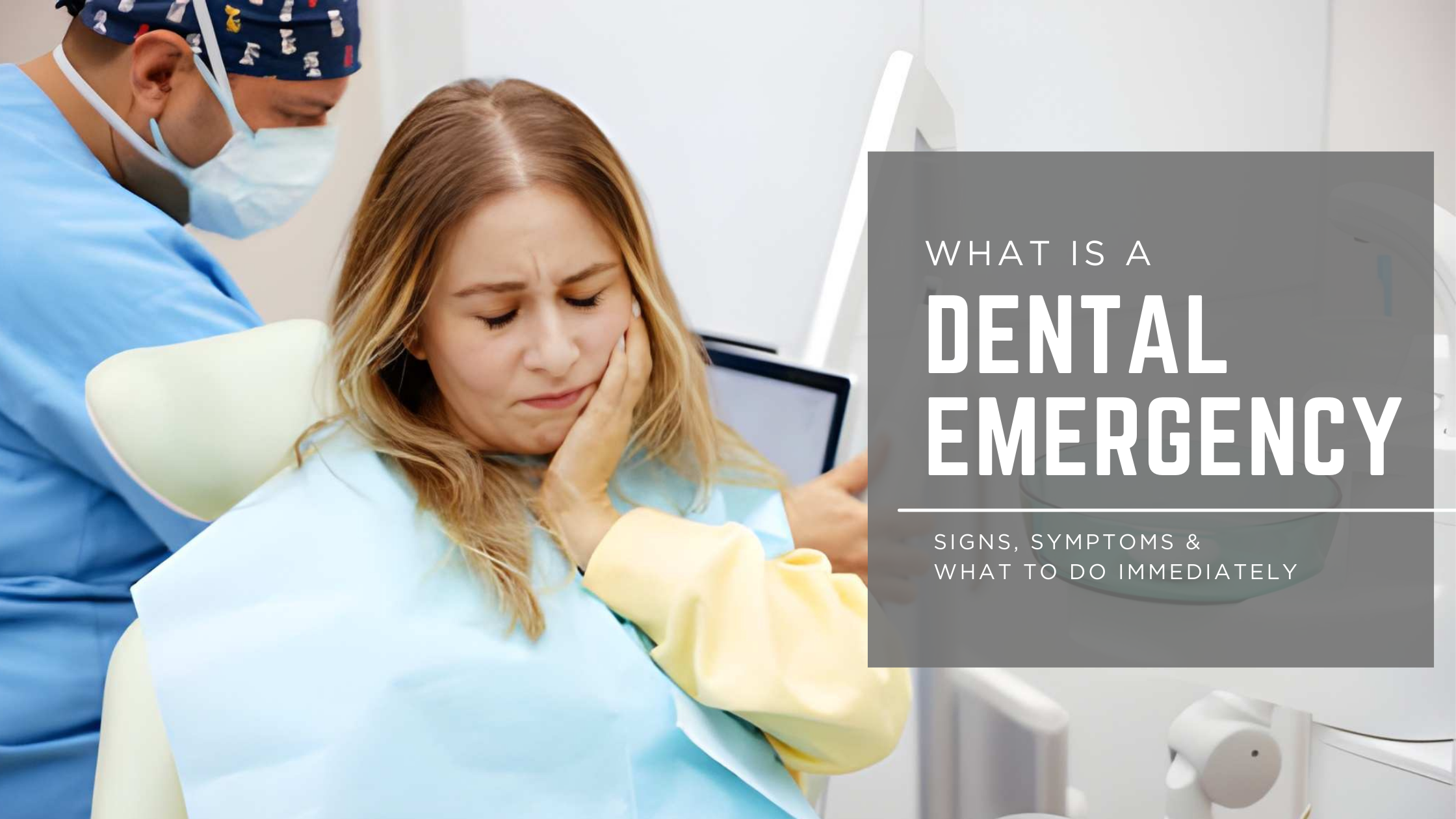
A dental emergency requires immediate attention to prevent serious complications. When you experience sudden tooth damage, severe pain, or injury to your mouth, quick action can mean the difference between saving and losing a tooth. Understanding which dental problems need urgent care and which can wait until regular office hours is essential for protecting your oral health.
What Actually Counts as a Dental Emergency?
A Dental emergency is any situation where you need immediate care to stop bleeding that won’t quit, ease severe pain, save a tooth, or prevent an infection from spreading. That’s it. If your situation doesn’t check one of those boxes, it can probably wait for a regular appointment.
Here’s a quick way to figure out if you’re dealing with an emergency:
Ask yourself these five questions:
- Is there bleeding that won’t stop after 10-15 minutes of pressure?
- Are you in severe pain that over-the-counter meds can’t touch?
- Can you breathe and swallow normally?
- Did a permanent tooth just get knocked completely out?
- Do you have facial swelling plus a fever?
If you answered yes to any of these, you need to act fast. Some of these situations give you less than an hour to save your tooth.
The Most Common Dental Emergencies
Knocked-Out Tooth
This is the big one. When a permanent tooth gets knocked out completely, you have a very small window to save it. We’re talking 30 to 60 minutes, tops. After that, your chances of keeping that tooth drop fast.
You’ll know it’s happened because the tooth is fully out of the socket and there’s usually bleeding. One important note: if it’s a baby tooth, don’t try to put it back in. Ever. That can mess up the permanent tooth growing underneath. This advice is only for adult teeth.
Severe Toothache
Not every toothache needs emergency care. But some do. If your tooth pain has lasted more than a day or two and isn’t getting better with ibuprofen or acetaminophen, that’s a red flag. Same if the pain is so bad you can’t sleep or eat.
Watch out for pain that spreads beyond the tooth itself. If it’s shooting into your jaw, up to your ear, or down your neck, something’s wrong. This kind of pain usually means an infection, a nasty cavity that’s gone too deep, or a cracked tooth you can’t see.
Dental Abscess or Infection
This one can get dangerous fast. An abscess is basically a pocket of pus from a bacterial infection. You might see a bump on your gums that looks like a pimple. Your face or gums might be swollen. There could be a bad taste in your mouth that won’t go away.
If you’ve got a fever with any of these symptoms, don’t wait. Dental infections don’t just stay in your mouth. They can spread to other parts of your body, and yes, that can become life-threatening. People end up in the hospital from untreated dental infections more often than you’d think.
Cracked or Broken Tooth
Whether this is an emergency depends on how bad the break is. A tiny chip on the edge of your tooth? That can wait. But if you’ve got a crack that hurts when you bite down, or if you can see pink or red inside the tooth where it broke, you need to call your dentist right away.
Big pieces missing from a tooth also count as urgent. The problem isn’t just how it looks. When the inside of your tooth gets exposed, bacteria can get in there and cause an infection.
Lost Filling or Crown
This sits somewhere in the middle. It’s not as urgent as a knocked-out tooth, but you shouldn’t ignore it for weeks either. When a filling falls out or a crown comes off, that tooth is vulnerable. The exposed area is sensitive and can get damaged easily or develop decay.
You’ll probably feel it right away. Sudden sensitivity to hot or cold. Maybe a rough or sharp edge where the filling used to be. If a crown fell off, you might notice a gap or feel the stub of your tooth with your tongue.
Cuts to Your Lips, Tongue, Cheeks, or Gums
Mouths bleed a lot. That’s normal because there’s so much blood flow to this area. Most cuts inside your mouth will stop bleeding on their own with a little pressure. But if you’ve been holding pressure for 15 to 20 minutes and it’s still bleeding heavily, that needs professional attention.
Deep cuts or ones that won’t close might need stitches. Don’t try to tough it out if the bleeding isn’t slowing down.
Something Stuck Between Your Teeth
Usually, this is just annoying. A piece of popcorn kernel or a seed wedged in there. Try gently flossing it out. If that works, you’re fine. But if you can’t get it out and it’s causing real pain or your gums around it start swelling up, call your dentist. That could turn into an infection.
What to Do Right Now: Action Steps for Each Emergency
Okay, so something’s wrong. Here’s exactly what to do, step by step.
If a Tooth Got Knocked Out
Every second matters here. First, find the tooth. Pick it up by the white part (the crown) only. Don’t touch the root part, even if it’s dirty. That root has living cells on it that need to stay alive.
Rinse it gently with water if there’s dirt on it. Don’t scrub it. Don’t use soap. Just a quick, gentle rinse.
Now here’s what most people don’t know: you should try to put it back in the socket yourself. Really. Hold it in place with clean gauze or by gently biting down. If that feels too weird or you’re worried you’ll do it wrong, keep the tooth moist. Your best option is to tuck it between your cheek and gums. Second best is a small container of milk. Not water—milk. Water can damage those root cells.
Then get to a dentist. Right now. You’ve got maybe an hour. Call ahead so they’re ready for you.
If You Have a Bad Toothache
Start simple. Rinse your mouth with warm water. Sometimes food stuck around a tooth causes pain, so try flossing gently in that area.
Take ibuprofen or acetaminophen. Don’t put aspirin directly on your gums—that’s an old wives’ tale that actually burns your gum tissue. Take the pill normally with water.
Put a cold pack on the outside of your cheek for 15 minutes. Take it off for 15 minutes. Repeat. This helps with both pain and swelling.
Then call your dentist. Even if it’s the weekend, most have an emergency number. They’ll tell you if you need to come in today or if it can wait until their next opening.
If You Have an Abscess
Rinse your mouth with warm salt water. That can help keep the area cleaner. But whatever you do, don’t try to pop or drain the abscess yourself. That’s a good way to spread the infection.
Take something for the pain. Use that cold compress trick again. Then get to a dentist fast. Abscesses almost always need antibiotics, and sometimes they need to be drained professionally. This isn’t something that gets better on its own.
If You Broke or Cracked a Tooth
Rinse your mouth out with warm water first. If you can find any pieces of the tooth, save them and bring them with you.
If there’s bleeding, fold up some gauze or a clean cloth and bite down on it gently. Keep pressure on it. Most bleeding stops within 10 minutes or so.
Cold compress on your face again if there’s swelling. And call your dentist. Even if you’re not in terrible pain right now, a crack can get worse fast.
If a Filling or Crown Fell Out
If you still have the crown, keep it. Sometimes dentists can reattach the same one. In the meantime, you can use a tiny bit of dental cement (they sell it at pharmacies) or even sugar-free gum to cover the exposed area temporarily. This protects it and helps with sensitivity.
Do not use superglue. People try this. Don’t be one of them. It’s toxic and can damage your tooth even more.
Call your dentist within the next day or two. This can usually wait until Monday if it happens on a weekend, but don’t put it off for weeks.
If You’re Bleeding from a Cut
Rinse with salt water or mouthwash if you have it. Then take a piece of clean gauze and press it firmly against the cut. You can also use a tea bag—the tannic acid in tea actually helps stop bleeding.
Hold that pressure for a solid 15 minutes. Don’t keep checking to see if it stopped. Just hold it. Use a cold pack on the outside of your face.
If it’s still bleeding heavily after 20 minutes, you need to see someone. Either call your dentist or head to urgent care.
If Something’s Stuck Between Your Teeth
Be gentle with this one. Use dental floss and try to work it out slowly. Don’t go at it with a toothpick, and definitely don’t use anything sharp like a needle or knife. People hurt themselves doing that all the time.
Rinse your mouth with water. Sometimes that helps loosen whatever’s stuck. If you can’t get it out after a few tries and it’s not causing major pain, call your dentist during regular hours. If it hurts a lot or your gums are swelling, call sooner.
Should You Go to the ER or the Dentist?
This confuses people. Here’s the simple version: emergency rooms are for medical emergencies. Dentists are for dental problems. There’s some overlap, but not much.
Go to the hospital emergency room if:
- Your jaw might be broken
- You got hit in the face hard and might have other injuries
- You’re having trouble breathing or swallowing
- Bleeding won’t stop no matter what you do
- You have a high fever, and your face is swelling up fast
Call an emergency dentist for:
- Knocked-out teeth
- Terrible toothaches
- Abscesses
- Badly broken teeth
Here’s why: ER doctors can help with pain and infections. They’ll give you pain meds and maybe antibiotics. But they can’t do a filling, put in a crown, or do a root canal. You’ll still need to see a dentist after, so if the problem is purely dental, start with the dentist.
Things You Should Never Do
When you’re in pain and panicking, it’s easy to make mistakes. Here are the big ones to avoid:
Don’t wait and hope it gets better. Dental problems don’t heal themselves. That infection isn’t going to disappear on its own, and waiting just makes everything worse and more expensive.
Don’t touch the root of a knocked-out tooth. Those cells die when you handle them.
Don’t put aspirin tablets on your gums. This old trick causes chemical burns. Take the aspirin with water like normal.
Don’t use superglue on dental work. It’s poisonous and ruins your tooth.
Don’t try to pop an abscess. You could spread the infection into your bloodstream.
Don’t store a knocked-out tooth in water. Water damages the root cells. Use milk or tuck it in your cheek.
How to Prevent Dental Emergencies
Nobody wants to deal with this stuff. Here’s how to avoid it:
See your dentist twice a year. Most emergencies start as small problems that get ignored. Regular checkups catch those early.
Brush twice a day. Floss once a day. Basic stuff, but it matters.
If you play contact sports, wear a mouthguard. Custom ones from your dentist work best, but even the cheap ones from the store help.
Don’t chew ice. Don’t bite down on hard candy or popcorn kernels. Don’t use your teeth to open packages or bottles. Your teeth aren’t tools.
If something small bothers you—a slight sensitivity, a tiny chip—get it checked before it becomes a big problem. A small filling now beats a root canal later.
Final Thoughts
Dental emergencies are scary. Your mouth is a sensitive area, and when something goes wrong, it really gets your attention. But most emergencies are manageable if you know what to do and act quickly.
The key things to remember: knocked-out teeth need attention within an hour. Infections can spread and get dangerous. Severe pain that won’t respond to medicine needs professional care. And when in doubt, call your dentist. They’d rather hear from you and tell you it can wait than have you waiting with something serious.
Keep your dentist’s emergency number saved in your phone right now. You won’t remember to do it later, and you don’t want to be searching for it while you’re in pain.
For more services related to dental emergencies, implants, and comprehensive oral care, visit Dental Implant Massapequa. Our experienced team is ready to help you maintain optimal dental health and respond quickly when emergencies arise.