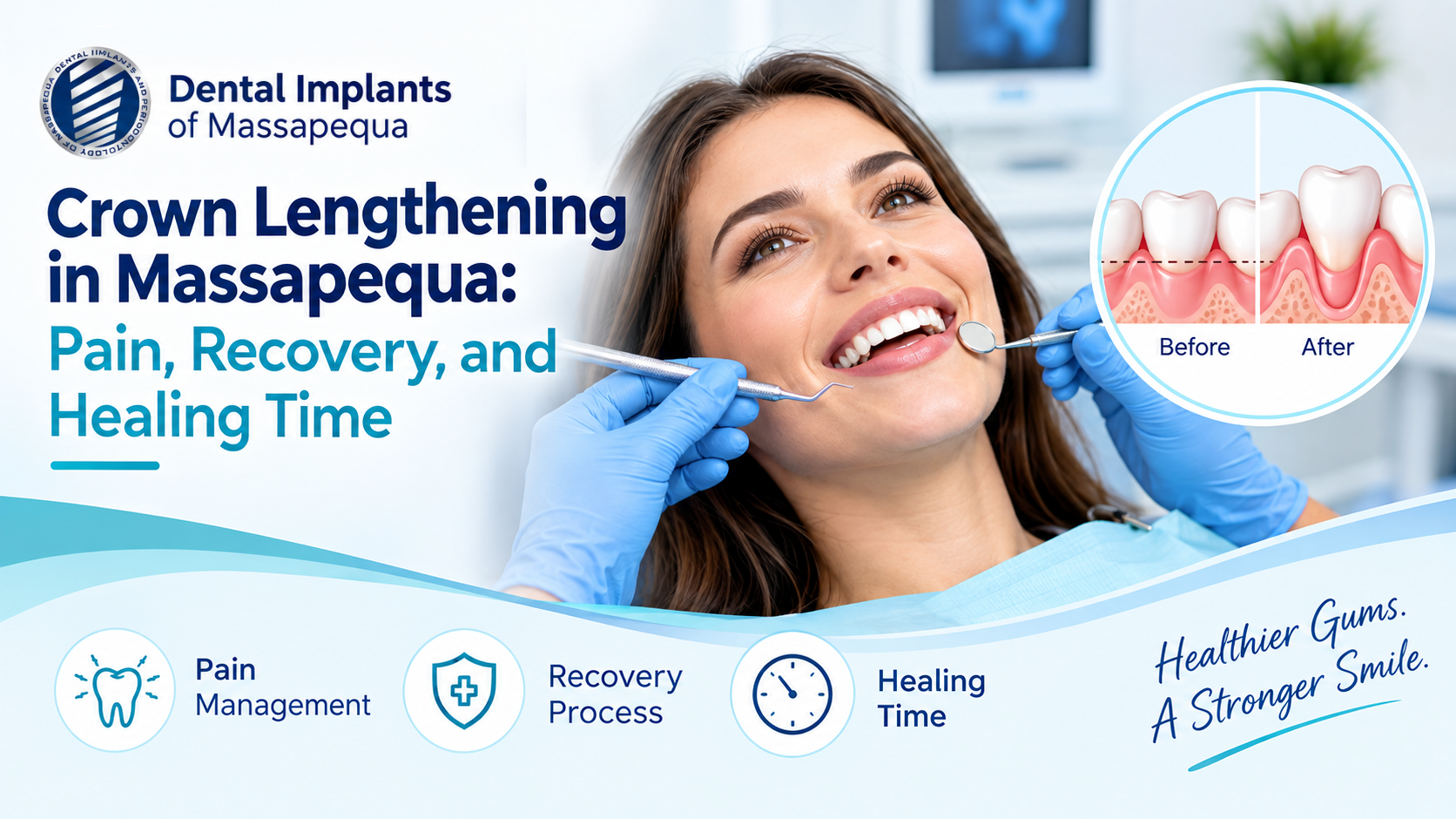
Have your teeth always looked shorter than you would like? Or has your dentist explained that there is not enough healthy tooth structure available to support a crown? Crown Lengthening in Massapequa would be suggested for cosmetic or restorative reasons.
Despite its name, crown lengthening does not make the tooth itself grow. Instead, the procedure increases the amount of tooth visible above the gumline by carefully modifying the surrounding gum tissue and, when necessary, the supporting bone.
Dental Implants of Massapequa gives personalized periodontal and restorative care based on each patient’s dental needs. Understanding what happens during treatment, how uncomfortable it may be, and what recovery involves could help you prepare for a consultation.
What Is Crown Lengthening?
Crown lengthening is a periodontal procedure that exposes more of a tooth above the gumline. Depending on your anatomy and treatment goals, the periodontist may remove or reshape excess gum tissue. In some cases, a small amount of supporting bone must also be reshaped.
There are two common reasons for treatment.
Cosmetic crown lengthening may be considered when excess gum tissue makes the teeth appear unusually short or contributes to a gummy smile. Carefully modifying the gumline could create more balanced tooth to gum proportions.
Functional crown lengthening would be suggested when decay, a fracture, or another defect extends beneath the gumline and insufficient healthy tooth structure is available for restorative treatment. Exposing additional structure could give the dentist better access for placing a crown or another restoration.
The right technique depends on the tooth, periodontal tissues, bone levels, and intended restoration. An examination is necessary before understanding that treatment is needed or not.
Is Crown Lengthening Painful?
One of the most common patient concerns is whether crown lengthening painful treatment could be. During the procedure, local anesthesia is used to numb the treatment area. You would notice pressure, movement, or vibration, but sharp pain should not normally reduce.
After the anesthetic wears off, the area would feel tender or swollen. Discomfort could be different according to the extent of surgery and whether bone reshaping was needed or not.
Your dental professional would suggest the right pain relief option like medication when medically needed. Following postoperative instructions, choosing softer foods temporarily, and protecting the treated area could also make recovery more comfortable.
Serious pain should not be ignored. Contact your dental office if discomfort becomes intense or progressively worse, or if you develop persistent bleeding, fever, or increasing swelling.
Crown Lengthening vs. Gum Contouring: What’s the Difference?
Understanding crown lengthening vs gum contouring could help explain why different procedures would be suggested for similar looking concerns.
Gum contouring generally focuses on reshaping soft tissue to create a more even gumline. It is commonly connected with cosmetic treatment.
Crown lengthening could also reshape gum tissue, but the procedure would include modification of supporting bone when clinically necessary. It could therefore serve both cosmetic and restorative purposes.
For example, someone concerned primarily about an uneven gumline may need only soft tissue reshaping. A patient with a fractured tooth extending beneath the gumline would need a periodontal procedure that exposes enough healthy structure for restoration.
The distinction cannot be made from look alone. Gum thickness, bone position, tooth structure, and the planned dental treatment all influence the recommendation.
When Crown Lengthening Is Considered Alongside Gum Recession Treatment
Crown lengthening and gum recession are not the same condition, and crown lengthening is generally not a treatment for gum recession.
Gum recession happens when the gum tissue moves away from the crown and exposes part of the tooth root. Depending on the cause and severity, gum recession treatment would involve monitoring, improved oral hygiene techniques, periodontal care, understanding contributing factors, or a gum graft/root coverage procedure.
In some patients, an irregular gumline would create an aesthetic concern while restorative treatment needs carefully planned changes to the surrounding tissues. These situations should not automatically be classified as recession needs crown lengthening.
A periodontal checkup could identify the cause of an uneven gumline and understand whether treatment is necessary. Understanding the underlying condition is more important than choosing a procedure based solely on appearance.
The Recovery Process
Recovery depends on how much gum tissue was treated and bone was reshaped.
First day: Little bleeding, tenderness, or swelling could happen. Follow your healthcare instructions for managing and protecting the surgical area.
Days two to three: Swelling becomes more noticeable before gradually improving. Softer foods could make eating more comfortable and chewing directly over the treated area may need to be avoided.
First week: Discomfort generally starts settling. Continue following the cleaning instructions given by your dental professional rather than disturbing the healing tissue.
Following weeks: The gumline continues to heal and mature. A follow up appointment would be used to check tissue healing and remove sutures when needed..
Feeling comfortable does not necessarily mean the periodontal tissues have completely stabilized. Research showed that the position of the gum margin could continue changing during the months following crown lengthening surgery, particularly when bone has been reshaped.
Gum Graft Healing Time If Combined With Crown Lengthening
A gum graft may sometimes be recommended as part of a broader periodontal treatment plan, although it serves a different purpose from crown lengthening.
Gum grafting could increase soft tissue thickness or cover exposed root surfaces in appropriately selected patients with recession. Gum graft healing time depends on the grafting technique, size and location of the treated area, donor site, and individual healing response.
Many patients experience substantial initial healing during the first couple of weeks. However, the tissues could continue maturing for several additional weeks or longer. A four to eight week period could be used as a broad reference for tissue maturation in some cases, but it should not be treated as a guaranteed timetable.
Your periodontist would give personalized instructions about eating, brushing, protecting the graft, and returning for follow up care.
Why Choose Dental Implants of Massapequa?
Choosing periodontal treatment begins with an accurate diagnosis and individualized planning. The amount of tooth exposure needed, position of the gumline, and relationship between gum tissue and supporting bone could differ significantly between patients.
Dental Implants of Massapequa gives personalized care for patients who may need crown lengthening for restorative or cosmetic reasons.
If you have been told that additional tooth structure needs to be exposed before receiving a crown, or you are concerned about excessive gum display, a consultation could help to understand whether the procedure is right for your situation.
Contact Dental Implants of Massapequa to schedule a consultation and discuss your treatment options.
Conclusion
Crown lengthening could be useful when additional tooth structure needs to be exposed for restorative treatment or when carefully planned gumline changes would improve a gummy smile. The procedure would involve gum tissue alone or gum and supporting bone, depending on individual anatomy.
Tenderness and swelling could happen afterward, right anesthesia and postoperative care could make the experience manageable. Recovery also varies, and the gumline may continue changing after the initial healing period.
If you are considering Crown Lengthening in Massapequa, a professional periodontal could help to understand whether this treatment fits your dental needs and long term goals.
Frequently Asked Questions
How long does crown lengthening take?
The procedure itself would be completed during one appointment, but treatment time could be surgical complexity. Your team could understand the expected duration after examining your tooth and gums.
Can I return to work after crown lengthening?
Some patients would return to normal activities relatively quickly, while others prefer additional rest. Your expected downtime depends on the extent of surgery and your individual recovery response.
Will crown lengthening make my teeth look longer?
Yes, treated teeth could appear longer because more tooth structure becomes visible. The final look depends on the original gumline, tooth proportions, surgical plan, and healing changes.
When will my gums look normal again?
The gums may look different immediately after surgery because of swelling and inflammation. Their appearance generally changes during healing, with final tissue maturation needing additional time.
Can crown lengthening prevent a crown from being placed?
Crown lengthening is often performed to create the understanding of healthy tooth structure needed for restoration. However, severely damaged teeth would remain unsuitable for crowns despite periodontal treatment.